
Cellular Carriers Join Forces To Promote Packet Switching
From the Original Pages
Click a page to enlarge · Alt-click to open the full issue
Goal is better data transfer from mobile computers
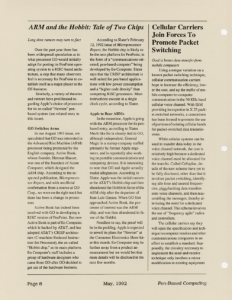
Using a unique variation on a known packet switching technique, cellular communication carriers hope to increase the efficiency, lower the cost, and up the traffic of mobile computer-to-computer communication in the 30 KHz band cellular voice channel. With IBM providing its expertise in X.25 packet-switched networks, a consortium has been formed to promote the use of portions of existing cellular bands for packet-switched data transmissions.
While cellular systems can be used to transfer data today in the voice channel network, the cost is relatively high because a dedicated voice channel must be allocated for the transfer. Called Celluplan, details of the new scheme have yet to be fully disclosed, other than that it involves packet switching, identifying idle time and unused frequencies, piggybacking data transfers onto voice channels, and then reassembling the messages, thereby alleviating the need for a dedicated voice channel. This scheme involves the use of “frequency agile” radios and controllers.
The cellular carriers say they will open the specification and technique to computer vendors and other communications companies in an effort to establish a standard. Supposedly, the circuitry necessary to implement the send-and-receive technique only involves a minor modification to existing equipment and can be fitted onto a 1×1-inch card for less than $25.
The carriers, which include Southwestern Bell, Bell Atlantic, Nynex, McCaw Cellular, GTE, Pacific Telesis, US West, and Ameritech, plan on utilizing the new technique early next year, challenging ARDIS and RAM Mobile Data, the two dominant radio-based data communications networks. Cellular data network providers will also undoubtedly feel the pressure from this aggressive push by the larger cellular carriers.
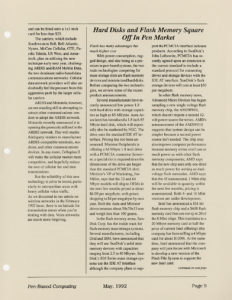
ARDIS and Motorola, however, are not standing still in attempting to attract other communications vendors to adopt the ARDIS network. Motorola recently announced it is opening the protocols utilized in the ARDIS network. This will enable third-party vendors to manufacture ARDIS-compatible terminals, modems, and other communications devices. In any event, Celluplan II will make the cellular market more competitive, and hopefully reduce the cost of cellular fax and data transmissions.
But the reliability of this new technology is yet to be tested, particularly in metropolitan areas with heavy cellular voice traffic. As we discussed in our article on wireless networks in the February 1992 issue, there is no latitude for transmission errors when you’re dealing with data. Voice networks are much more forgiving.
Transcribed from Pen-Based Computing, Volume 2, Number 2 — May 1992. Pages 8, 9.