

ParaGraph International, Inc.
ParaGraph International was founded as a Soviet-American joint venture in Moscow in 1989, with a US arm incorporated in 1991 in Boulder, Colorado, to commercialize cursive handwriting recognition technology developed at the Soviet Academy of Sciences. In October 1991 the company signed a licensing agreement with Apple Computer for its CalliGrapher recognition engine — the first commercially significant technology transfer from the Soviet Union to a major US computer company.
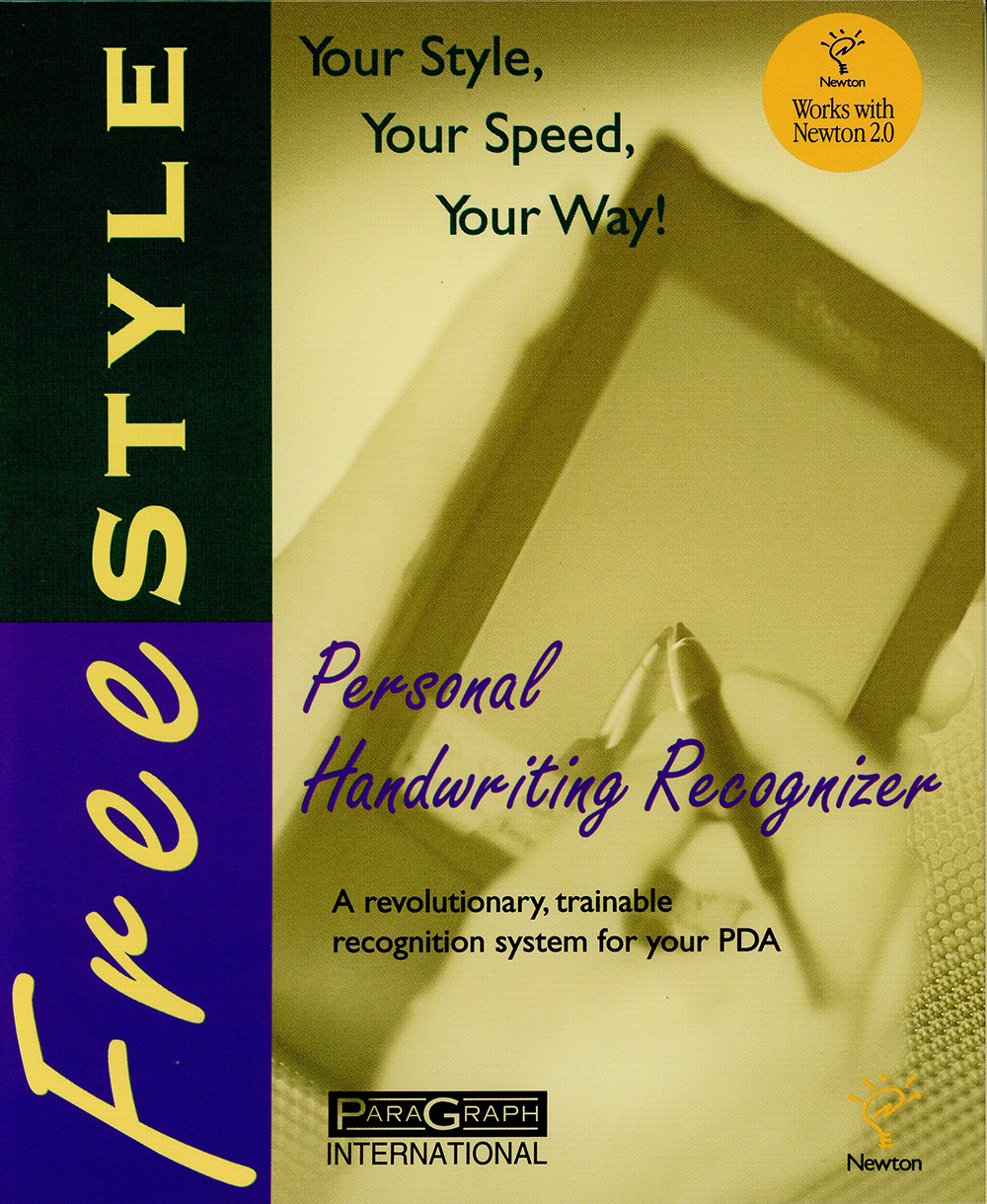
CalliGrapher became the handwriting recognizer behind Apple's Newton PDAs, GO Corporation's PenPoint operating system, and later a range of Windows CE handheld devices including NEC's MobilePro 750C, which in 1998 became the first Windows CE machine to ship with built-in natural handwriting recognition. ParaGraph was acquired by Silicon Graphics in May 1997 and folded into the newly formed Cosmo Software unit, continuing as ParaGraph PI Technology.
Organization Details
Campbell, California, 95008
USA
Stepan Pachikov (founder, president & CEO; chairman)
George Pachikov (co-founder; VP Education & Multimedia Division)
Gregory Slayton (president & COO, 1997)
William H. Pearlman (CEO, 1991)
Leonid Kitainik (VP products division)
Michael S. Riemer (VP marketing)
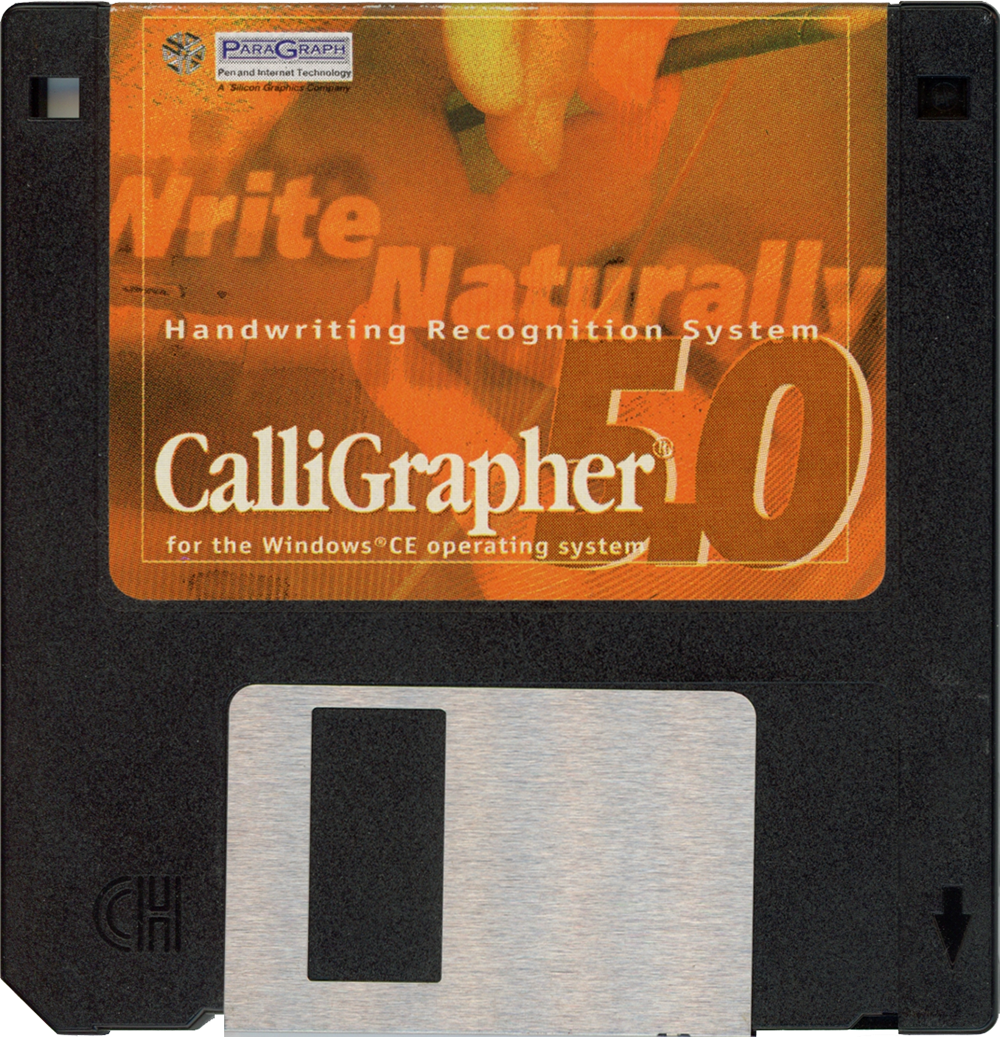
CalliGrapher — natural handwriting recognition for Newton, Windows CE, Palm PC, H/PC
HodoGraph — ink compression technology with up to 20:1 ratio
ParaScript — handwriting recognition from scanned and fax images
Home Space Builder — VRML 3D authoring tool for Windows
Virtual Home Museum — 3D AlterEgo immersive software
MorphInk — auto-morphing and animation technology
Timeline & Milestones
Timeline
Milestones
ParaGraph International was founded as a Soviet-American joint venture in Moscow in 1989, developing cursive handwriting recognition technology through two departments of the Soviet Academy of Sciences — the Council for Economics and Mathematics (CEMI) and the Academy of National Economics (ANE).1 The US arm was incorporated as ParaGraph International, Inc. in 1991 to market the joint venture's products worldwide.2 By October 1991, the US company maintained offices at 1035 Pearl Street in Boulder, Colorado, led by Stepan Pachikov as president and William H. Pearlman as chief executive officer; that same month, ParaGraph announced a development and licensing agreement with Apple Computer for its cursive handwriting recognition technology — the first commercially significant technology transfer from the Soviet Union to a major US computer company.1
In March 1992, ParaGraph announced a joint development effort with GO Corporation to integrate its CalliGrapher cursive recognition engine into PenPoint, GO's pen-based operating system, with GO acting as non-exclusive worldwide distributor.3 In June 1993, Apple's Personal Interactive Electronics (PIE) division formally licensed CalliGrapher as a component of the forthcoming Newton family of Personal Digital Assistants, and ParaGraph opened a development facility in Sunnyvale, California to work alongside Apple.4
ParaGraph's Education and Multimedia Division, headed by George Pachikov, demonstrated its Virtual Home Museum software at the Electronic Learning Fair at the San Jose Convention Center in December 1994, establishing a live Internet link between the Moscow Children's Computer Club and the ELF classroom team via real-time text messaging.5 In July 1995, ParaGraph announced the general commercial availability of its CalliGrapher recognition technology as Apple's exclusive license became non-exclusive on June 30, 1995, and the company simultaneously promoted its ParaScript off-line image recognition and HodoGraph ink compression technologies.2 Later that month, ParaGraph released Home Space Builder 1.0 for Windows at $49.95, a VRML 3D authoring tool designed to extend the World Wide Web from 2D pages into navigable virtual spaces.6
In June 1996, the Moscow Children's Computer Club — founded in 1986 by Stepan Pachikov, world chess champion Garry Kasparov, academician Abel Aganbegyan, and academician Evgeniy Velihov, and a longtime ParaGraph cause — celebrated its tenth anniversary with a presidential greeting from Boris Yeltsin recognizing its role in educating "over 2000 of the third millennium's specialists and engineers."7 By April 1997, ParaGraph had relocated to 1688 Dell Avenue in Campbell, California, and released CalliGrapher 4.3 for the Windows CE operating system at $49.95, providing natural cursive, print, and mixed handwriting recognition for handheld PCs.8
On May 14, 1997, Silicon Graphics announced its acquisition of ParaGraph International, folding the Campbell operations into Silicon Graphics' Mountain View campus and integrating them into the newly formed Cosmo Software business unit; Gregory Slayton served as president and chief operating officer of ParaGraph at the time of the acquisition, and Stepan Pachikov continued as founder and CEO.9 In December 1997, the renamed ParaGraph PI Technology unit shipped CalliGrapher 5.0 for Windows CE, which won Byte Magazine's "Best of Show — Winner" award at COMDEX '97 and was named a finalist for PC Week's "Best of COMDEX" award.10 In April 1998, ParaGraph PI announced CalliGrapher 5.1 with compatibility for both Handheld PC and Palm PC platforms,11 and the following month NEC's MobilePro 750C shipped as the first Windows CE device to include built-in natural handwriting recognition, with CalliGrapher embedded in ROM.12
AI generated using primary sources referenced in the footnotes
Footnotes
- ParaGraph International, Apple Signs Development, Licensing Agreement with Paragraph, A USSR-U.S. Joint Venture, for Cursive Handwriting Recognition Technology, October 7, 1991
- ParaGraph International, Paragraph International Announces the Availability of its Recognition Technology; Apple Continues Licensing Technology on Non-Exclusive Basis, July 5, 1995
- ParaGraph International, ParaGraph International and GO Corp. Collaborate to Recognize Cursive Handwriting, March 30, 1992
- Apple Computer, Apple Computer And Paragraph Announce Recognition Technology Agreement, June 7, 1993
- ParaGraph International, ParaGraph International Links Moscow Children's Computer Club Members to Electronic Learning Fair Team Members for Real-Time Communications, December 2, 1994
- ParaGraph International, Paragraph International Announces Home Space Builder; An Easy to Use Vrml Authoring Tool for Windows, July 31, 1995
- ParaGraph International, Yeltsin and Other Dignitaries Celebrate Moscow Children's Computer Club Ten-Year Anniversary; Children's Club Nurtured Computing At Dawn Of Glasnost, June 6, 1996
- ParaGraph International, Natural Handwriting Recognition for Windows CE-based Handheld PCs, April 23, 1997
- Silicon Graphics, Silicon Graphics to Acquire ParaGraph International; ParaGraph Becomes Key Component of Newly Formed Company - Cosmo Software, May 14, 1997
- Silicon Graphics, ParaGraph Ships Award-Winning Recognition for Windows CE; 'Best of COMDEX 97' and 'Best of Show, COMDEX 97', December 3, 1997
- ParaGraph PI, ParaGraph Announces Advanced Handwriting Recognition Software for Palm PC And H/PC Platforms, April 6, 1998
- ParaGraph PI, NEC MobilePro 750C Becomes First Windows CE Device to Include Built-In Natural Handwriting Recognition, May 12, 1998
Artifacts
2 artifacts in the collection
People

Oral History
Did you work at or with this organization? If so, we would like to include your story on this page. Let us know what you remember.
Connections
This organization's place in the wider network of people, organizations, and artifacts. Drag to pan, scroll to zoom, and tap any node to focus its connections.