Paragraph International FreeStyle (Newton)
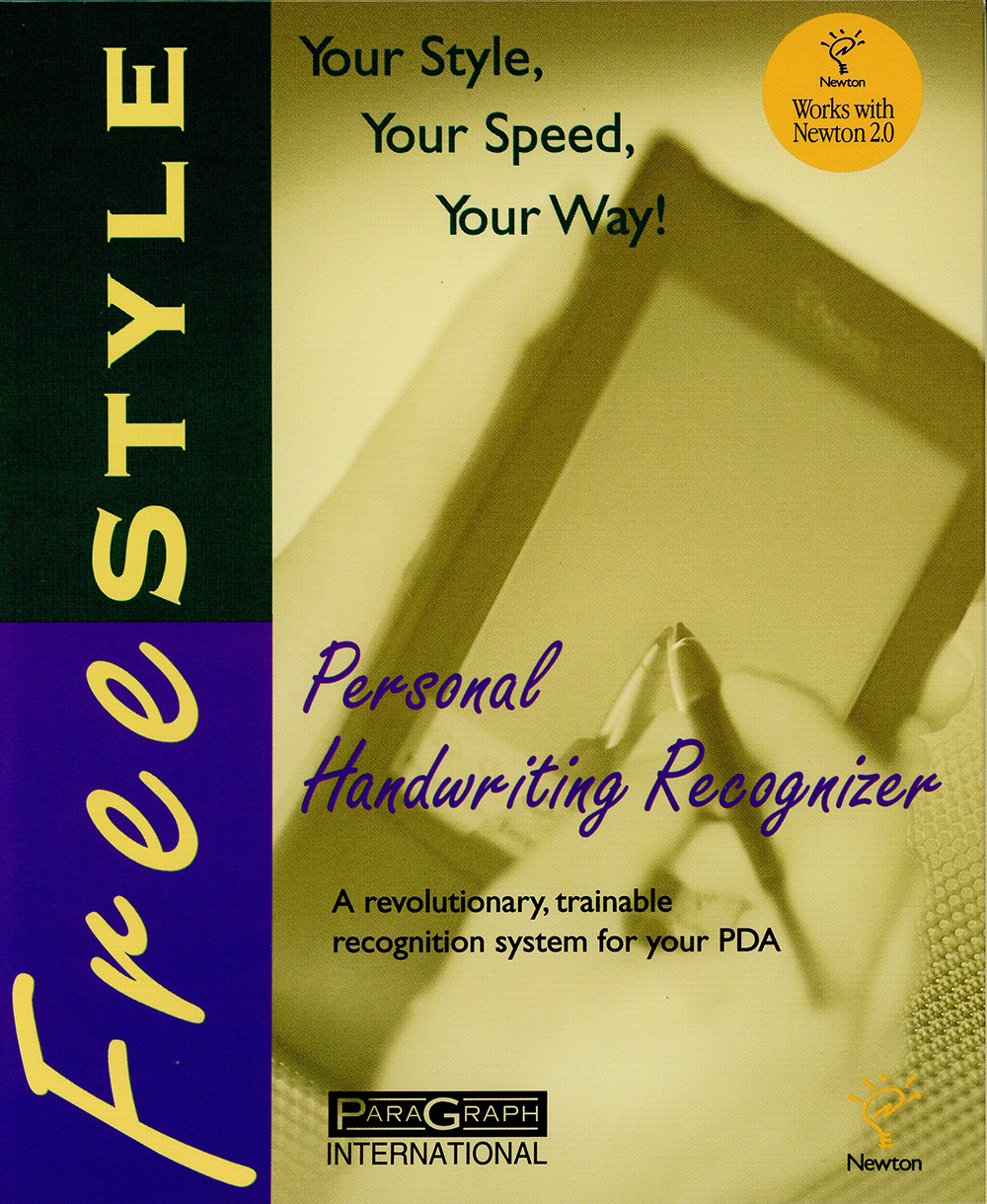
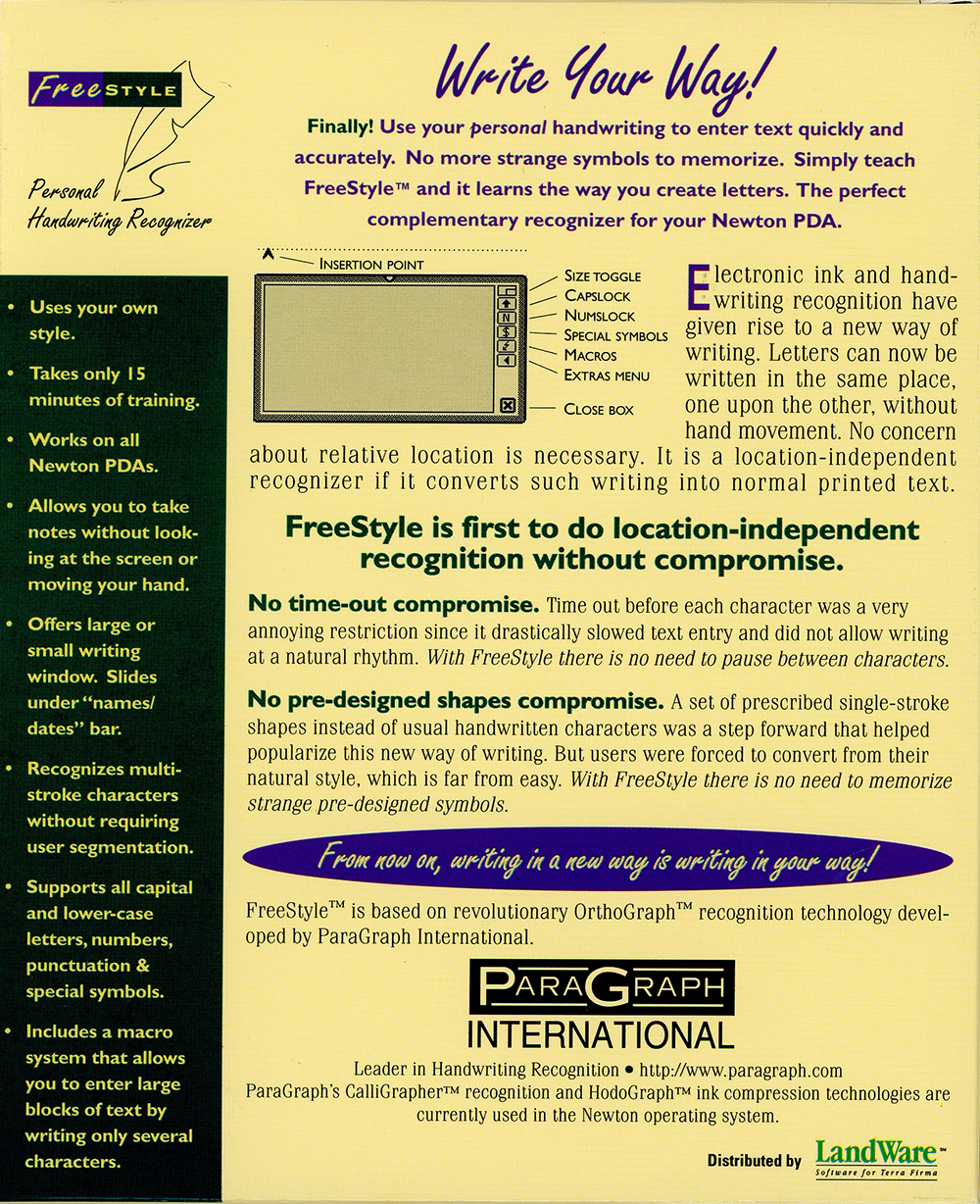
FreeStyle allowed Apple Newton MessagePad users to write on their devices using natural characters without moving their hand, and without pause between characters.
Were you involved with this artifact? If so, we would like to include your story on this page. Let us know how you contributed.
Tags:
Artifact Details
ParaGraph International, Inc.
United States
English
1995
Printed cardboard box covered with shrink-wrapped plastic.
Package includes:
- FreeStyle User's Guide (32 pages)
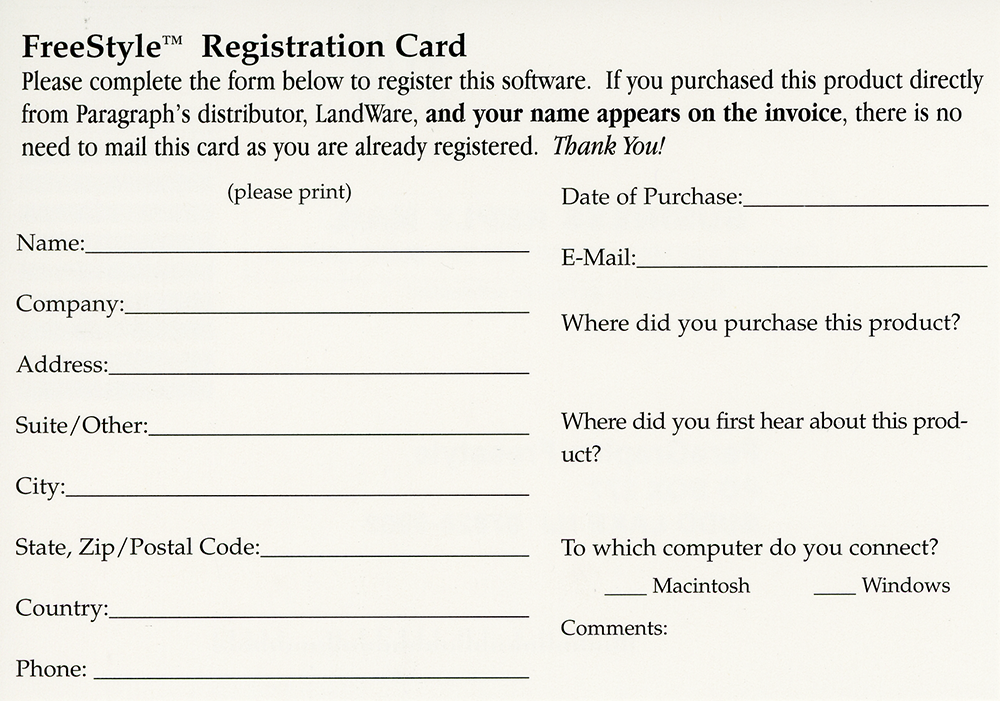
- Registration card
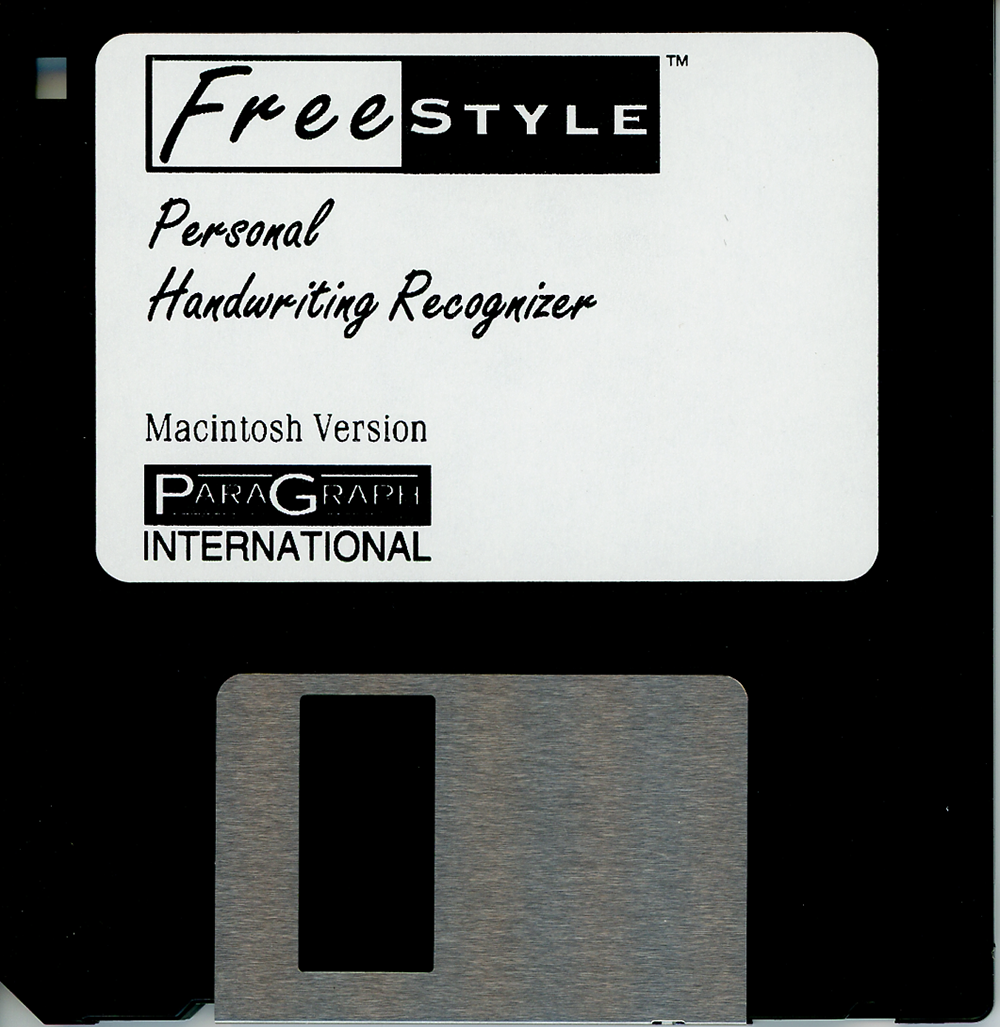
- 3.5" disk (Macintosh)
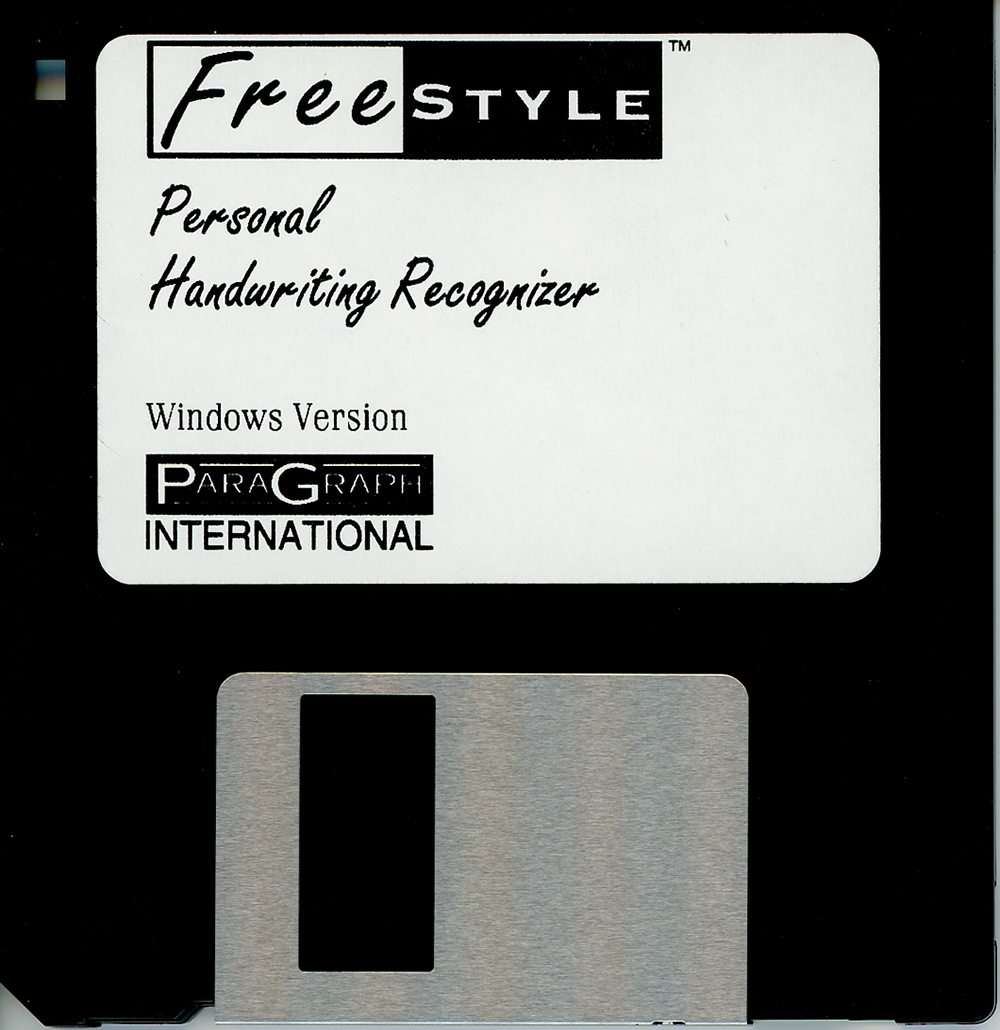
- 3.5" disk (Windows)
5.75" x 7"
1995
Acquired from publisher
2018-07-21
Organizations
People

History
FreeStyle was a personal handwriting recognizer for Apple's Newton MessagePad PDAs, published by ParaGraph International and distributed by LandWare.2 ParaGraph's recognition work originated in Moscow, where the company was established in 1989, and in June 1993 the Personal Interactive Electronics division of Apple Computer signed an agreement for ParaGraph's cursive handwriting recognition technology to be used in Apple's forthcoming Newton family of products.1 ParaGraph's president and chief executive officer was Stepan Pachikov.1
By mid-1995 ParaGraph's patented CalliGrapher technology — which recognized cursive, print, and mixed cursive/print handwriting — was implemented in the Newton operating system, and Apple's exclusive license to the technology became non-exclusive on June 30, 1995.3 FreeStyle was offered as a complementary recognizer for the Newton PDA, built on ParaGraph's OrthoGraph recognition technology, and worked with Newton 2.0.2
FreeStyle was designed to do location-independent recognition: letters could be written in the same place, one over the other, without moving the hand.2 It imposed no time-out before each character, so there was no need to pause between characters, and it required no pre-designed symbols to memorize.2 The recognizer was trainable, learning a user's own writing style in about fifteen minutes, and it supported capital and lower-case letters, numbers, punctuation, and special symbols, recognized multi-stroke characters without requiring user segmentation, and included a macro system for entering large blocks of text by writing only a few characters.2
FreeStyle shipped with a desktop installer supplied on both Macintosh and Windows disks, and product registration was handled through LandWare in Budd Lake, New Jersey.2 ParaGraph International was based at 1688 Dell Avenue in Campbell, California.2
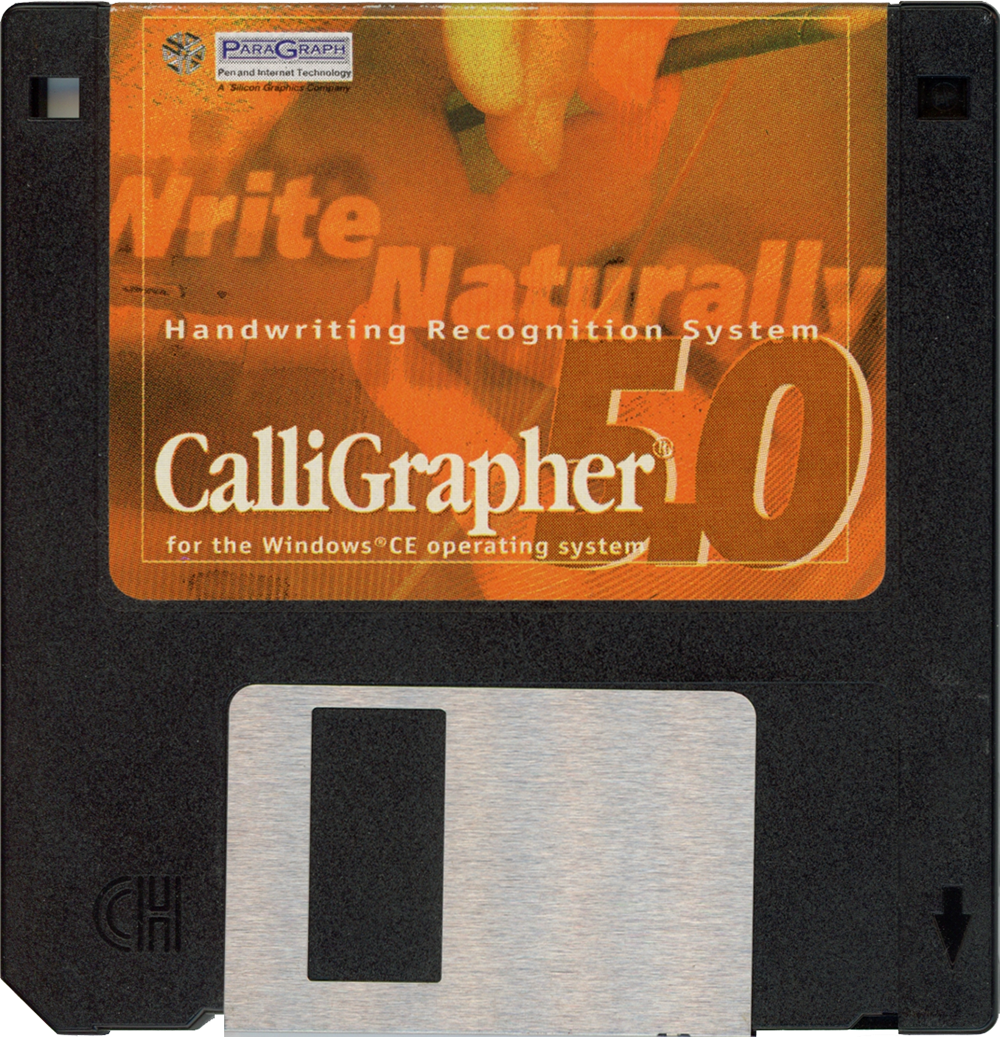
ParaGraph continued to develop its recognition technology, releasing CalliGrapher for Microsoft's Windows CE platform in 1997.4 In May 1997, Silicon Graphics acquired ParaGraph International.5
AI generated using primary sources referenced in the footnotes
Footnotes
- ParaGraph International, Apple Computer And Paragraph Announce Recognition Technology Agreement, June 7, 1993
- ParaGraph International, Inc., Paragraph International FreeStyle (Newton) (image scan), 1995
- ParaGraph International, Paragraph International Announces the Availability of its Recognition Technology; Apple Continues Licensing Technology on Non-Exclusive Basis, July 5, 1995
- ParaGraph International, Natural Handwriting Recognition for Windows CE-based Handheld PCs, April 23, 1997
- Silicon Graphics, Silicon Graphics to Acquire ParaGraph International; ParaGraph Becomes Key Component of Newly Formed Company - Cosmo Software, May 14, 1997
Oral History
Connections
This artifact's place in the wider network of people, organizations, and artifacts. Drag to pan, scroll to zoom, and tap any node to focus its connections.