GO Corporation PenPointers January 1992 (Newsletter)
PenPointers was the official software developers newsletter published by GO Corporation. Issues contained corporate updates, descriptions of new operating system features, hardware compatibility notes, and tips and techniques, among other information.
Were you involved with this artifact? If so, we would like to include your story on this page. Let us know how you contributed.
Artifact Details
GO Corporation
United States
English
January 1992
Four page, black & white, saddle-stitched, paper.
8.5" x 11" (4 pages)
PenPointers January 1992
1992
Direct from publisher
2020-07-03
Organizations

History
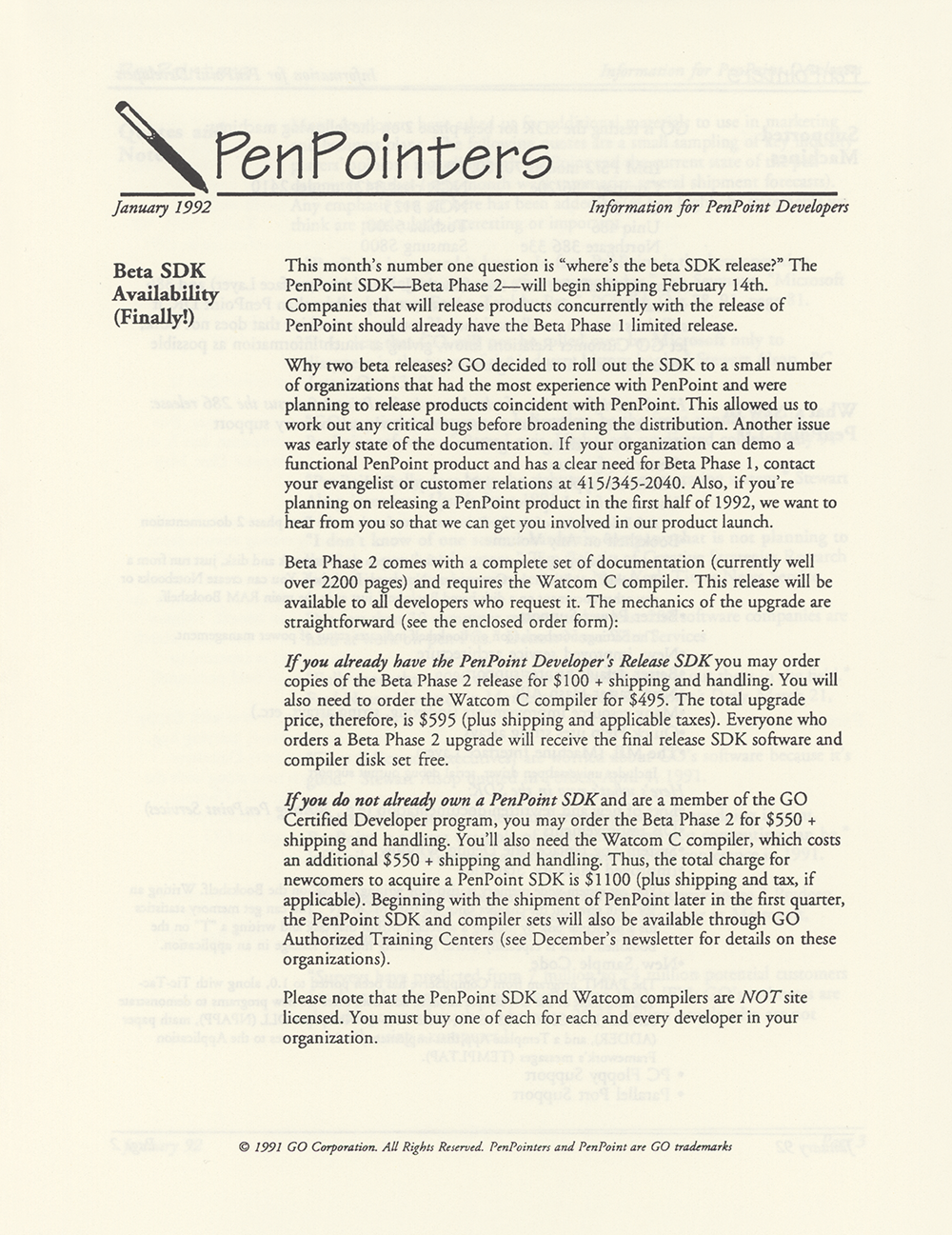
PenPointers was GO Corporation's official newsletter for PenPoint software developers, carrying corporate updates, descriptions of new operating-system features, hardware-compatibility notes, and developer tips and techniques.1 This January 1992 issue led with the availability of the PenPoint software development kit.1
The lead article announced that the PenPoint SDK Beta Phase 2 would begin shipping on February 14, 1992.1 The release came with more than 2,200 pages of documentation and required the Watcom C compiler, and the newsletter enclosed an order form setting out tiered upgrade pricing for existing Developer Release SDK owners and for new members of the GO Certified Developer program.1 Beta Phase 2 was the second phase of the PenPoint Beta Program that GO had announced in October 1991 — a three-phase rollout leading to the production release of PenPoint 1.0, which the company had planned for the first quarter of 1992.2
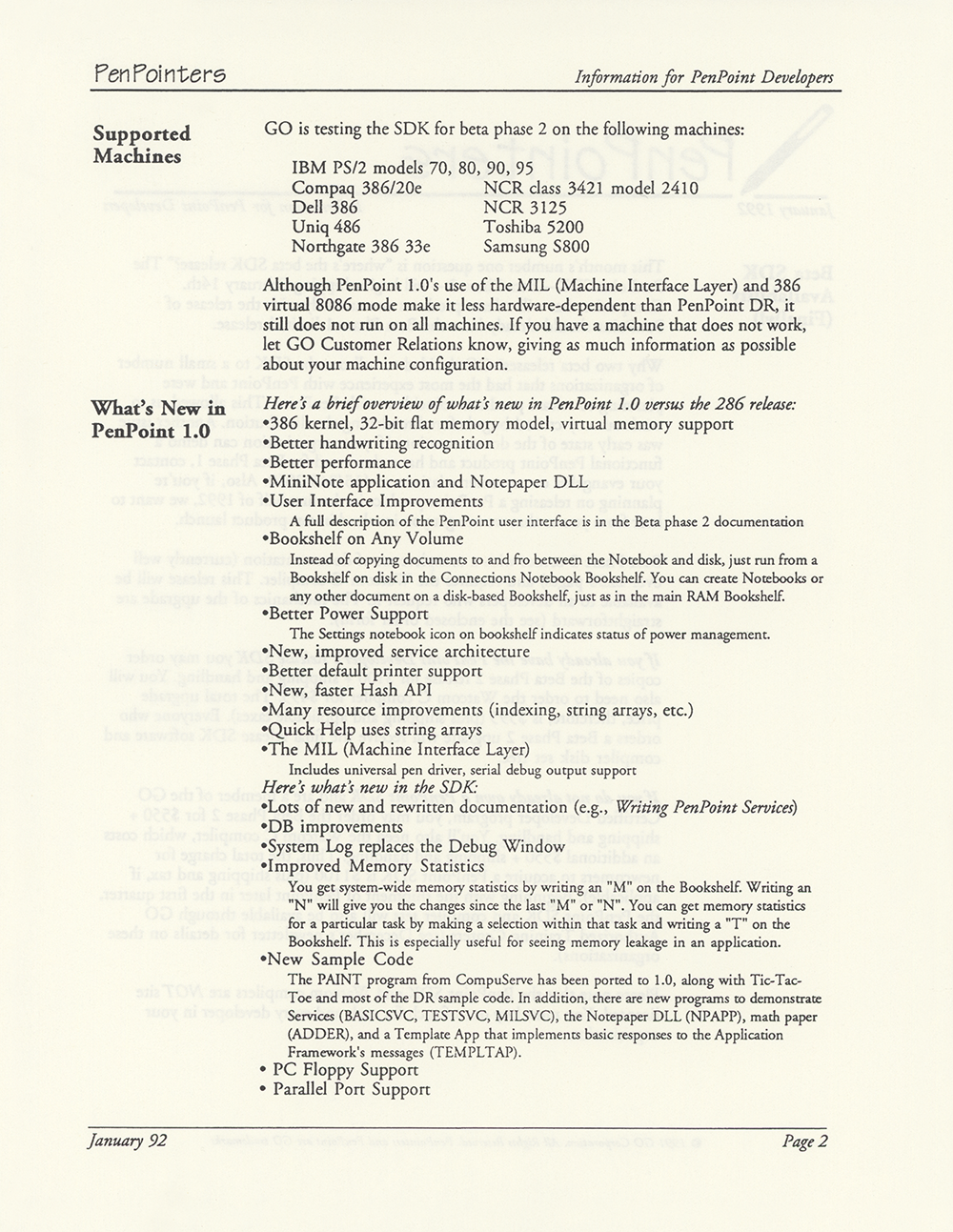
A second article listed the personal computers GO was using to test the Beta Phase 2 SDK, spanning models from IBM, Compaq, Dell, NCR, Toshiba, and other manufacturers, and noted that PenPoint's Machine Interface Layer made the system less hardware-dependent than the earlier release while still not running on every machine.1 The same page summarized what was new in PenPoint 1.0 relative to the Developer Release, including a 386 kernel with a 32-bit memory model and virtual-memory support, alongside improved handwriting recognition and performance.1
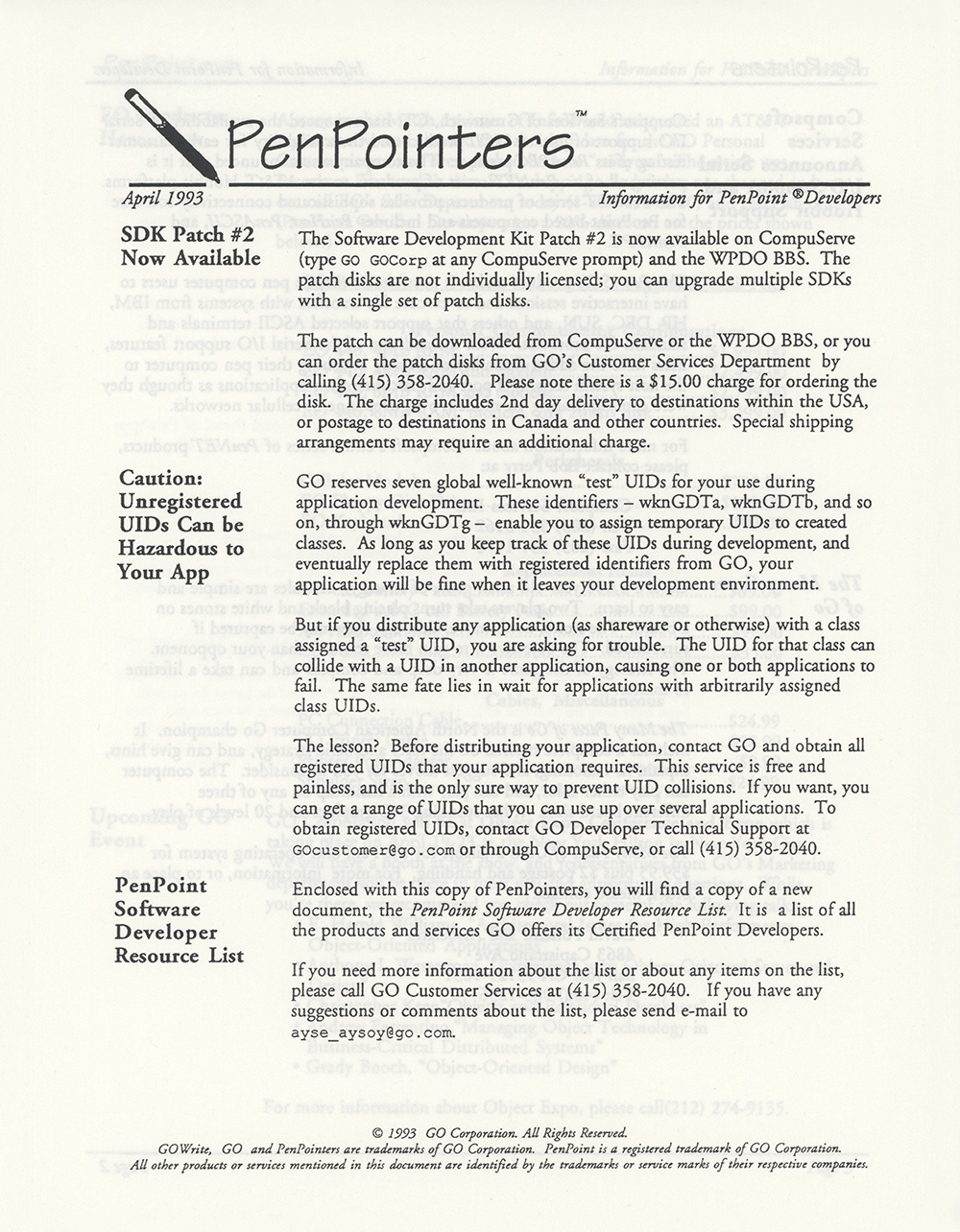
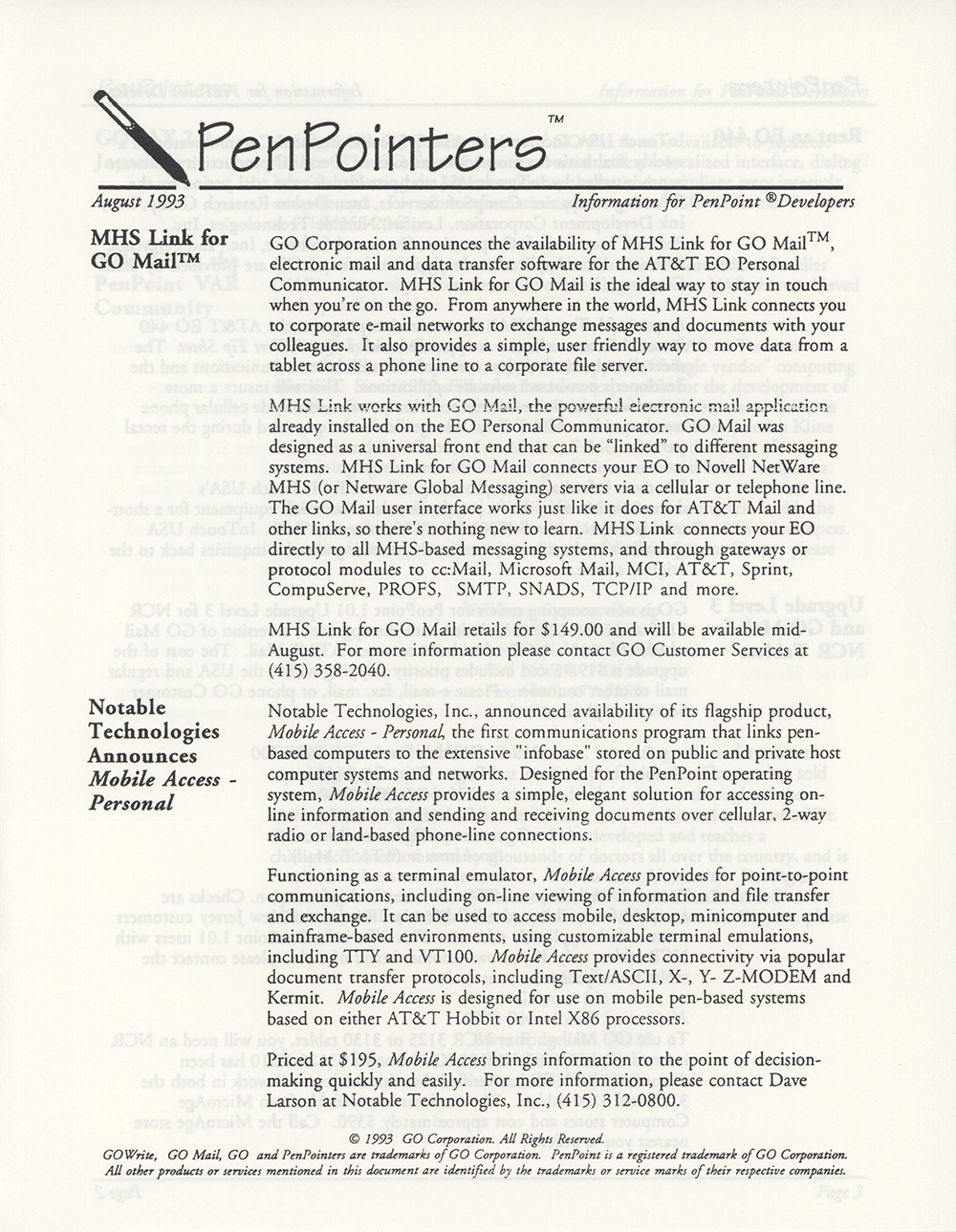
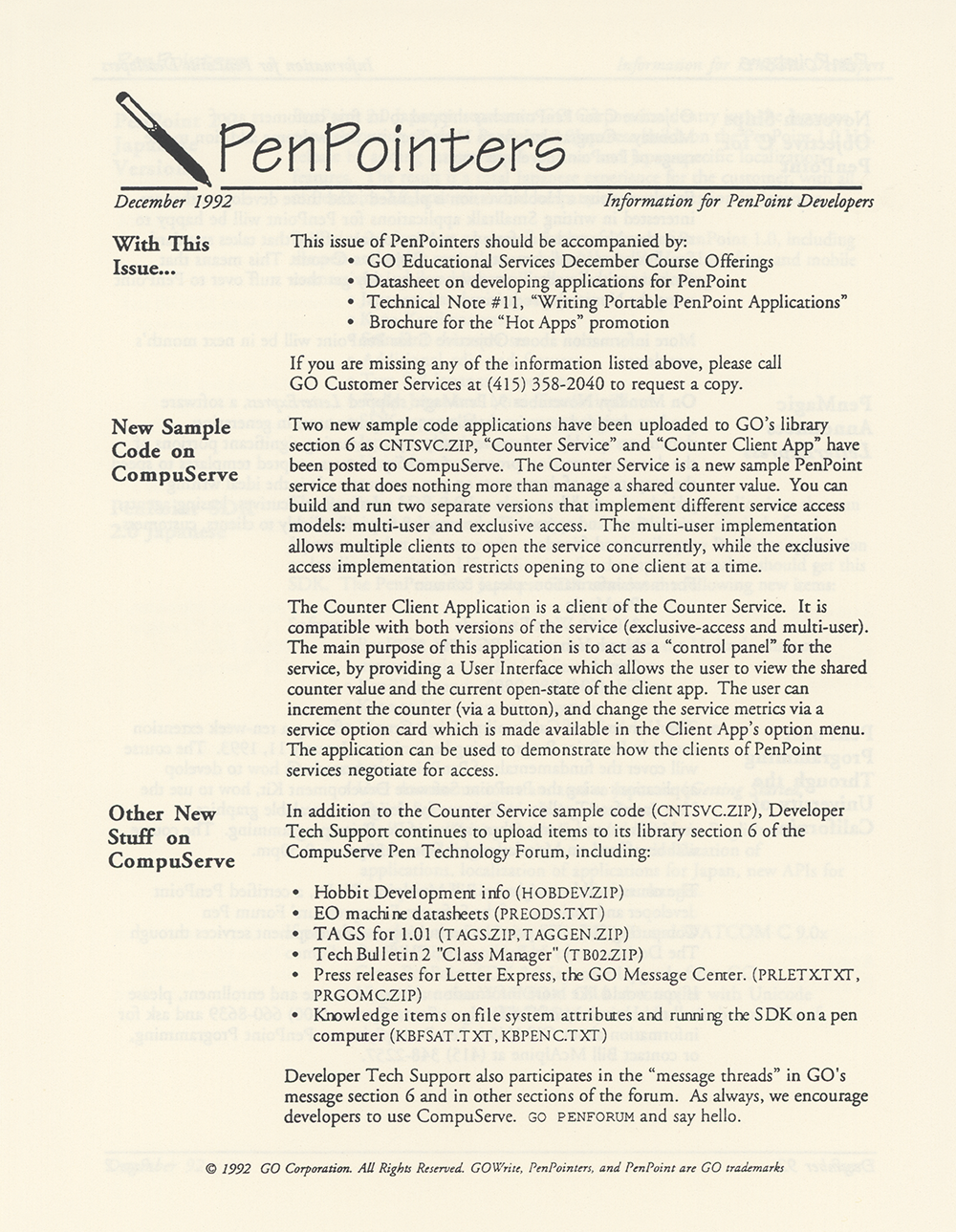
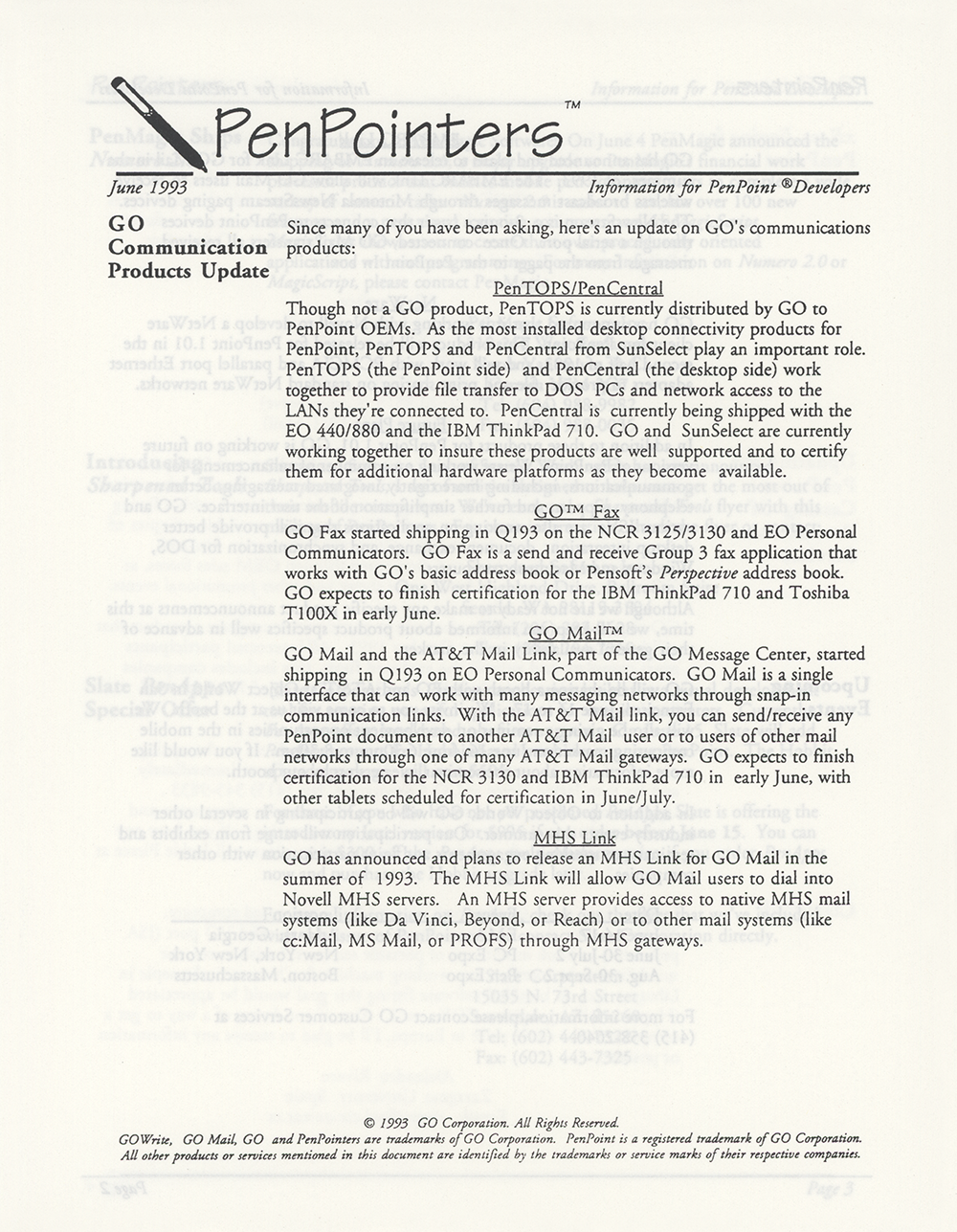
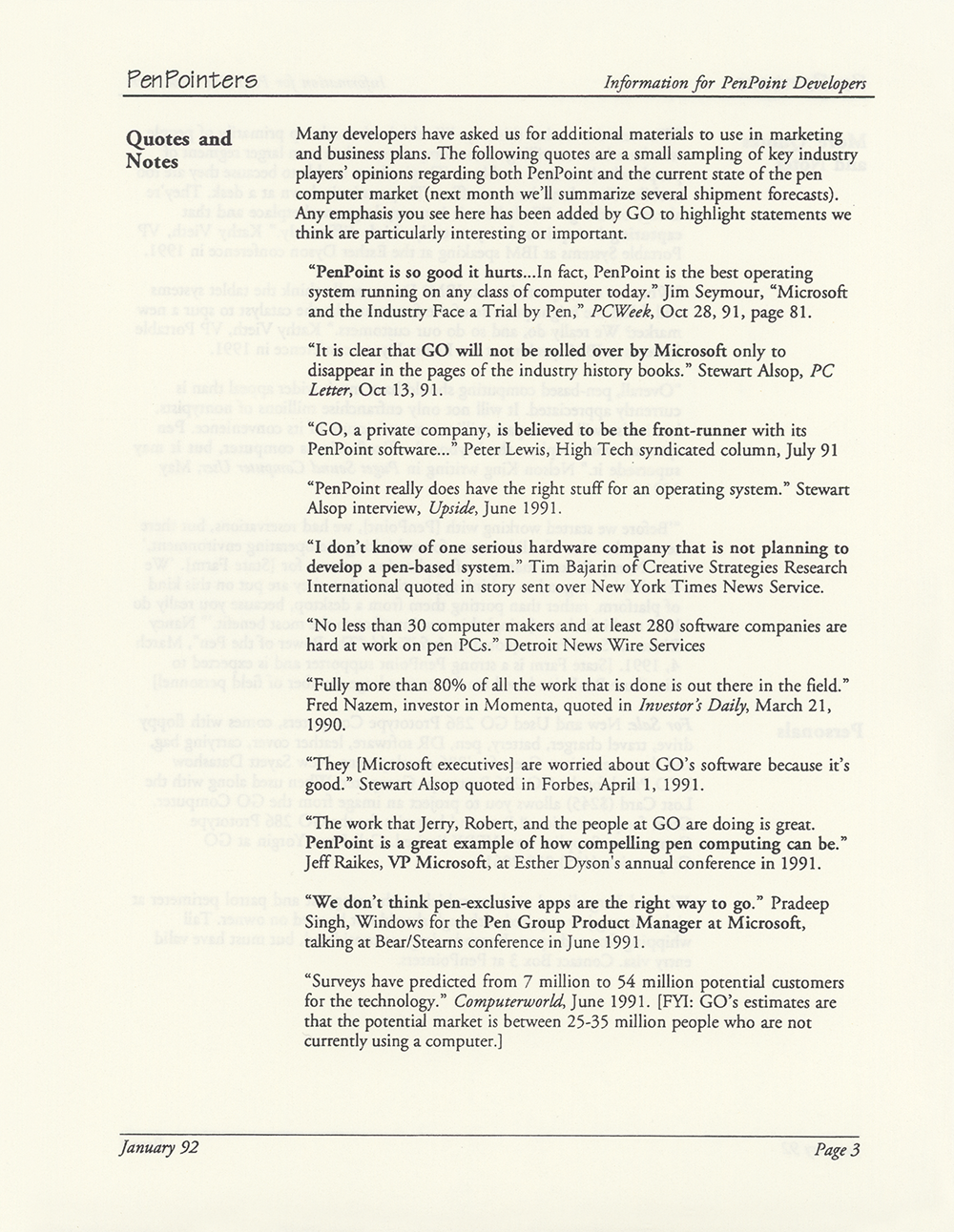
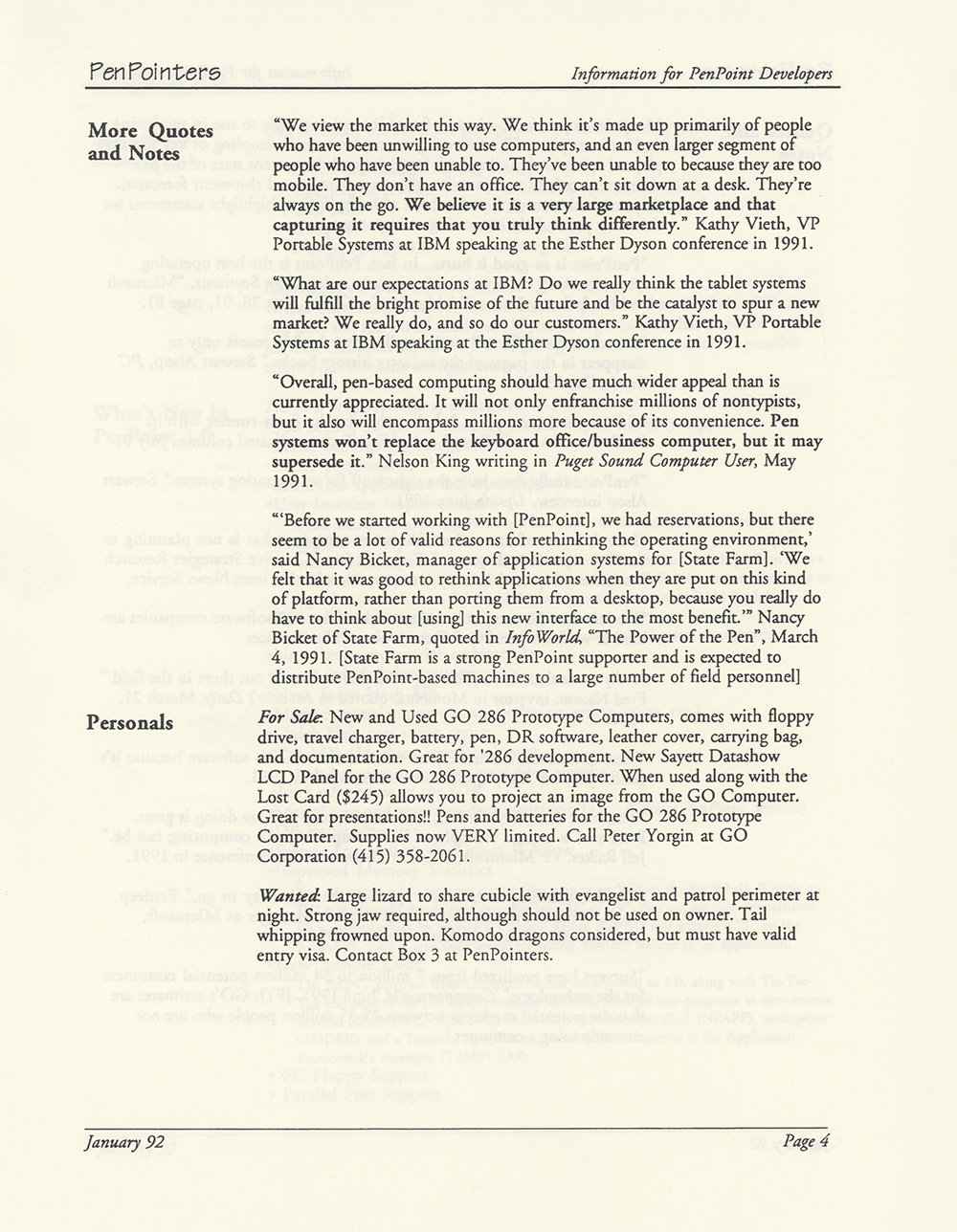
The remaining pages carried a "Quotes and Notes" selection of press and industry commentary on GO and PenPoint, followed by a lighthearted "Personals" column that, among joke listings, offered used GO 286 prototype computers and accessories for sale to developers.1
GO Corporation announced the commercial release of PenPoint three months later, on April 16, 1992, shipping the PenPoint Software Development Kit — which, as this issue had described, required the Watcom C/386 compiler — through GO and its distributors.3
AI generated using primary sources referenced in the footnotes
Footnotes
- GO Corporation, GO Corporation PenPointers January 1992 (Newsletter) (image scan), January 1992
- GO Corporation, GO Expands Licensing, Education and Beta Programs to Accelerate Mobile Computer Market Development, October 21, 1991
- GO Corporation, GO Corp. Announces Availability of PenPoint, April 16, 1992
Oral History
Media
GO Corporation – Introducing PenPoint (1991)
GO Corporation used this video to promote the developer release of the PenPoint OS in 1991. PenPoint was one of the first operating systems designed specifically to run on mobile devices. Featuring: Dr. Norm Vincent (State Farm), Terry Conner (EDS), Phillipe Kahn (Borland), Jack Blount (Novell), David Reed (Lotus), Alan Lefkof (Grid), Vern Raburn (Slate), Dan Bricklin (Slate), and Jim Cannavino (IBM).
Connections
This artifact's place in the wider network of people, organizations, and artifacts. Drag to pan, scroll to zoom, and tap any node to focus its connections.