
Sony Does it Again with New Magic Link
From the Original Pages
Click a page to enlarge · Alt-click to open the full issue
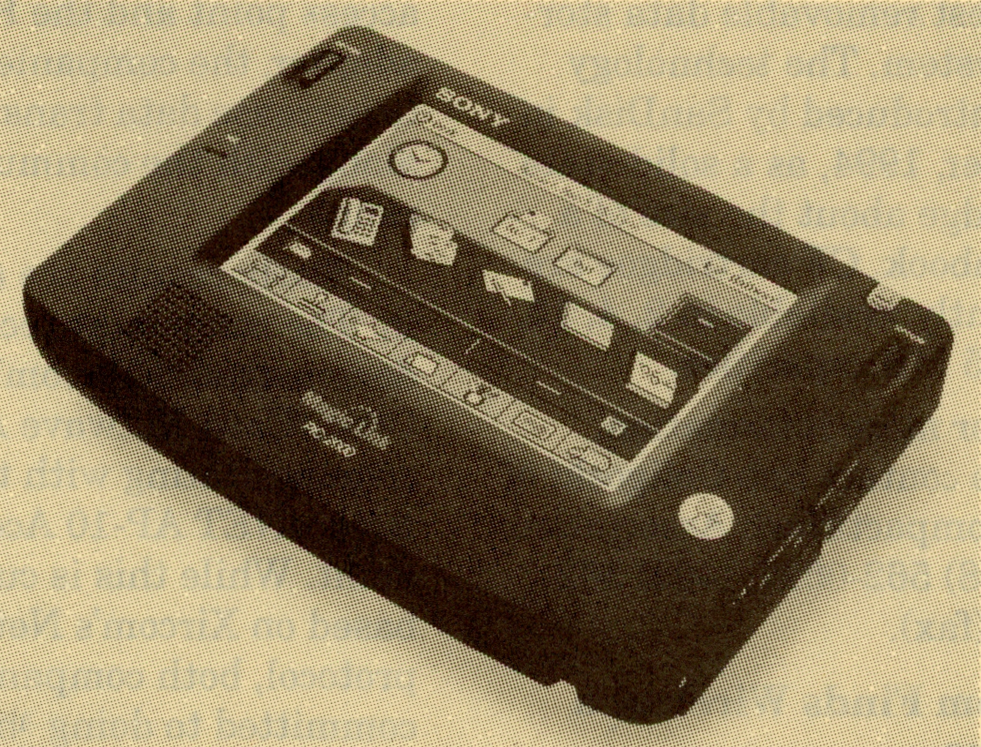
The recent General Magic Developer’s Conference, held in San Jose, California, served as an appropriate backdrop for the much anticipated introduction of Sony’s successor to the innovative Magic Link personal intelligent communicator. Dubbed the PIC-2000, the US $899 device replaces the original PIC-1000 adding several significant new features and responding to customer requests for improvements to the original communicator.
I Can See Clearly Now…
The most noticeable, and perhaps most significant, improvement in the PIC-2000 is its new backlit screen which can be manually switched on or off. This single feature vastly improves the usability of the Magic Link in just about every lighting condition.
Arguably the second most important improvement comes in the amount of built-in memory. The original Magic Link sometimes faced a memory crunch, especially when the amount of information and loaded applications became excessive. The PIC-2000 attacks this by being equipped with a healthy 2 MB of battery-backed memory, 1.5 MB of which is now allocated as persistent.
As you’ll recall, the original Magic Link featured 1 MB of RAM, 512 KB of which was allocated to system processing in a region known as transient memory. The inclusion of one additional megabyte of persistent memory not only speeds up the new Magic Cap 1.5 system that comes standard with the PIC-2000, but also makes out-of-memory problems less likely.
Sony has also addressed three other common requests from early Magic Link users. For example, the PIC-2000 now sports two PC Card (PCMCIA) slots instead of the original one. This means that your storage card or PC Card-based application can now co-reside with your paging card or other peripheral. And speaking of communication, the PIC-2000 now features a full 14.4 Kbps fax modem built in, replacing the slightly anachronistic 2400 bps fax modem of before.
In addition, Sony has added built-in speakerphone capability using the existing microphone and speaker. One slight disadvantage is that the system employs a half-duplex model, which means that only one side can talk at any time. While this is workable, it is probably best used for simpler conversations. Where privacy is required, you can now attach any standard headset using the built-in plug on the side of the unit.
Summary
Sony’s Magic Link PIC-2000 represents an impressive second iteration at creating a useful PDA with potentially broad appeal. Sony has clearly listened to its customers and built a device responding to the most vocal criticisms. This is made doubly clear by the decision to include the once-optional Lithium-Ion battery as standard.
The PIC-2000 is a faster, brighter, and more powerful communicator. While it is by no means the final word on PDA design, it addresses almost all of the major concerns for a mainstream market—all except price.
Sony Electronics Inc.
3300 Zanker Road
San Jose, CA 95134
Manny Vara
(408) 955-5142
http://www.sony.com
Transcribed from Pen-Based Computing, Volume 5, Number 11 — November 1995. Page 3.