PIE Developers – Volume 2.1 – January, 1994
PIE Developers, later PDA Developers, was the premier, independent printed resource for PDA developers in the mid-to-late 1990s. Originally billing itself as “A Technical Journal for Newton Developers,” early issues contained detailed articles, tutorials, and coding examples focusing on the Apple Newton MessagePad platform.
Published by San Francisco-based Creative Digital Systems, the journal was expertly managed and edited by Steve Mann (who also wrote a number of articles in each issue).
Were you involved with this artifact? If so, we would like to include your story on this page. Let us know how you contributed.
Artifact Details
Creative Digital, Inc.
United States
English
January, 1994
$8.95 US, $9.95 Canada
Saddled-stitched printed journal on salmon-colored paper.
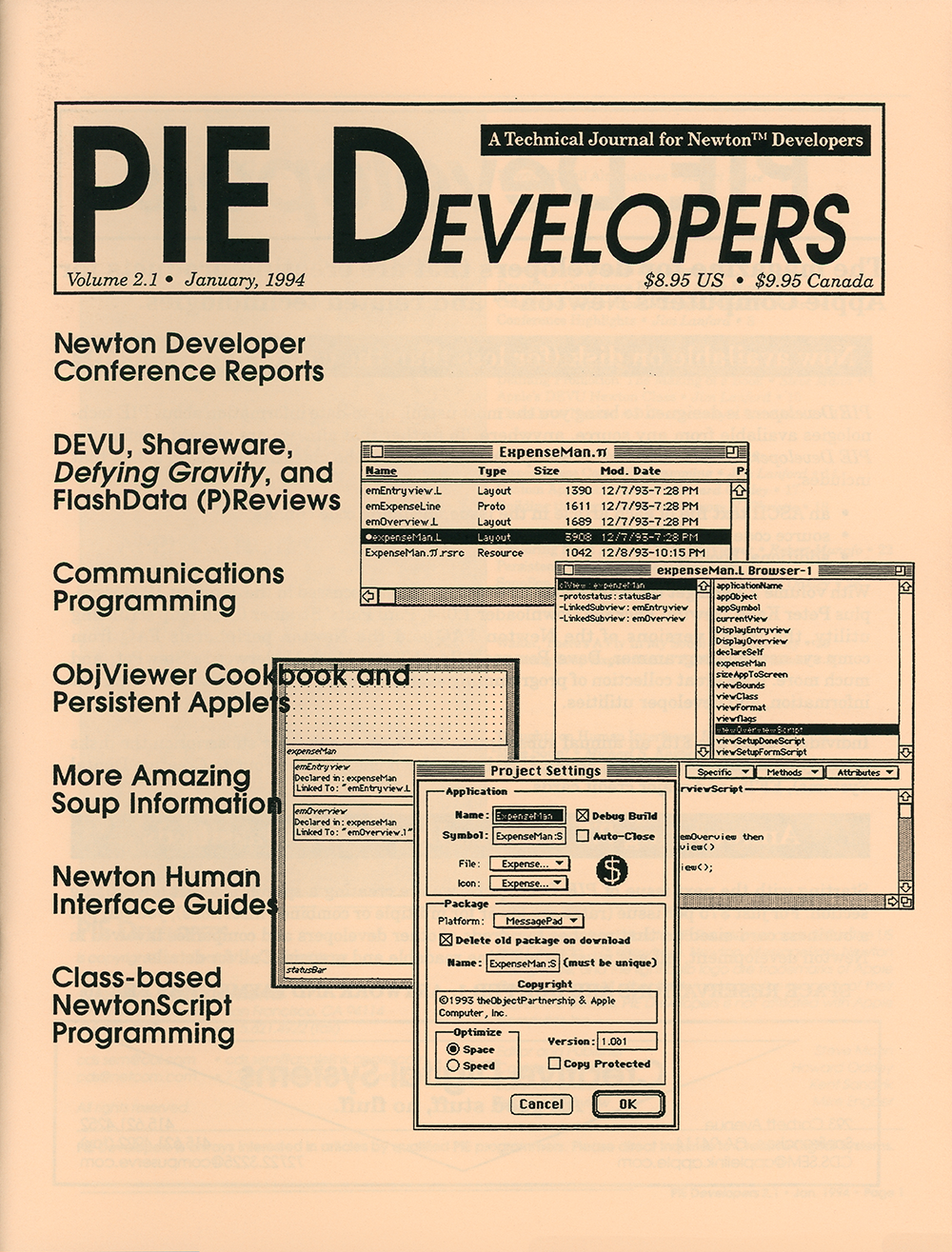
In this issue:
- Guest Editorial
- News and Errata
- Newton Developer Conference Reports
- Previews and Reviews (Developer Shareware, Defining Promotion: The Making of a Book, Apple's Devu Newton Class, Flashdata: Newton 4D Connectivity)
- Simple View Tricks
- Inspectorless Comm Programming
- Custom Application Icons
- Building the Perfect Beast
- Exploring Newton's Memory with ObjViewer
- Persistent Applets
- Soupson - A Simple Soup Manager
- Waiter: There's a Fly in My Soup
- More Amazing Soup Information
- Amazing Soup Experiments
- Thoughts on the Human Interface
- More Soup?
- Class-based NewtonScript Programming
8.5" x 11" (42 pages)
PIE Developers 2.1
January, 1994
Acquired from publisher
2018-07-21
Organizations
People

History
PIE Developers Volume 2.1, dated January 1994, is an issue of a printed technical journal that billed itself on its cover as "A Technical Journal for Newton Developers" and sold for $8.95 in the United States and $9.95 in Canada.1 The cover promoted reports from the Newton developer conference; previews of the DEVU, Shareware, Defying Gravity, and FlashData developer tools; articles on communications programming and class-based NewtonScript programming; an ObjViewer cookbook; further coverage of the Newton "soup" data store; and a treatment of the Newton human interface guidelines.2
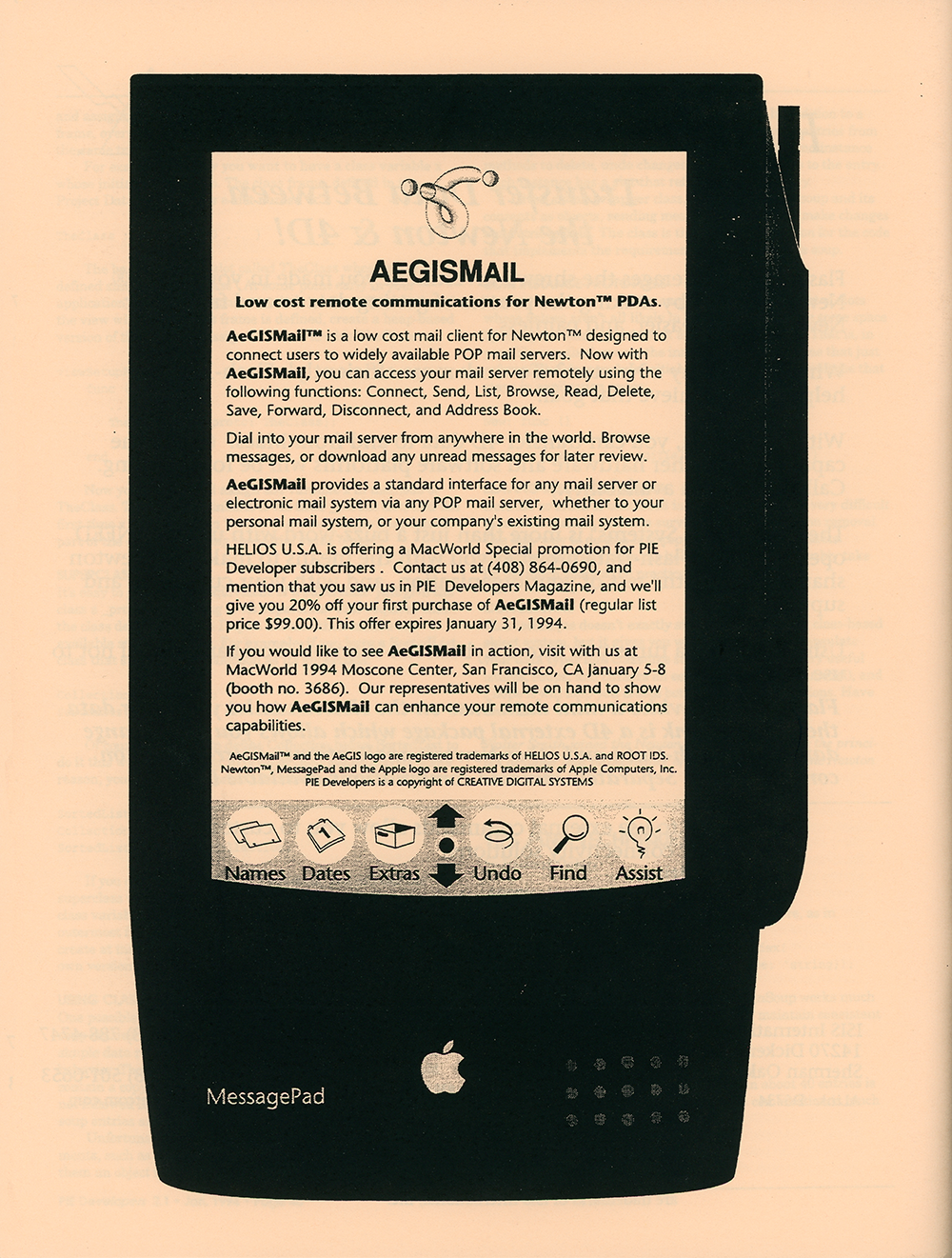
The back cover carried an advertisement for AEGISMAIL, a low-cost remote-mail client for Newton PDAs offered by HELIOS U.S.A., which extended PIE Developers subscribers a discount off the program's $99 list price and invited them to its booth at the January 1994 MacWorld Exposition in San Francisco.3
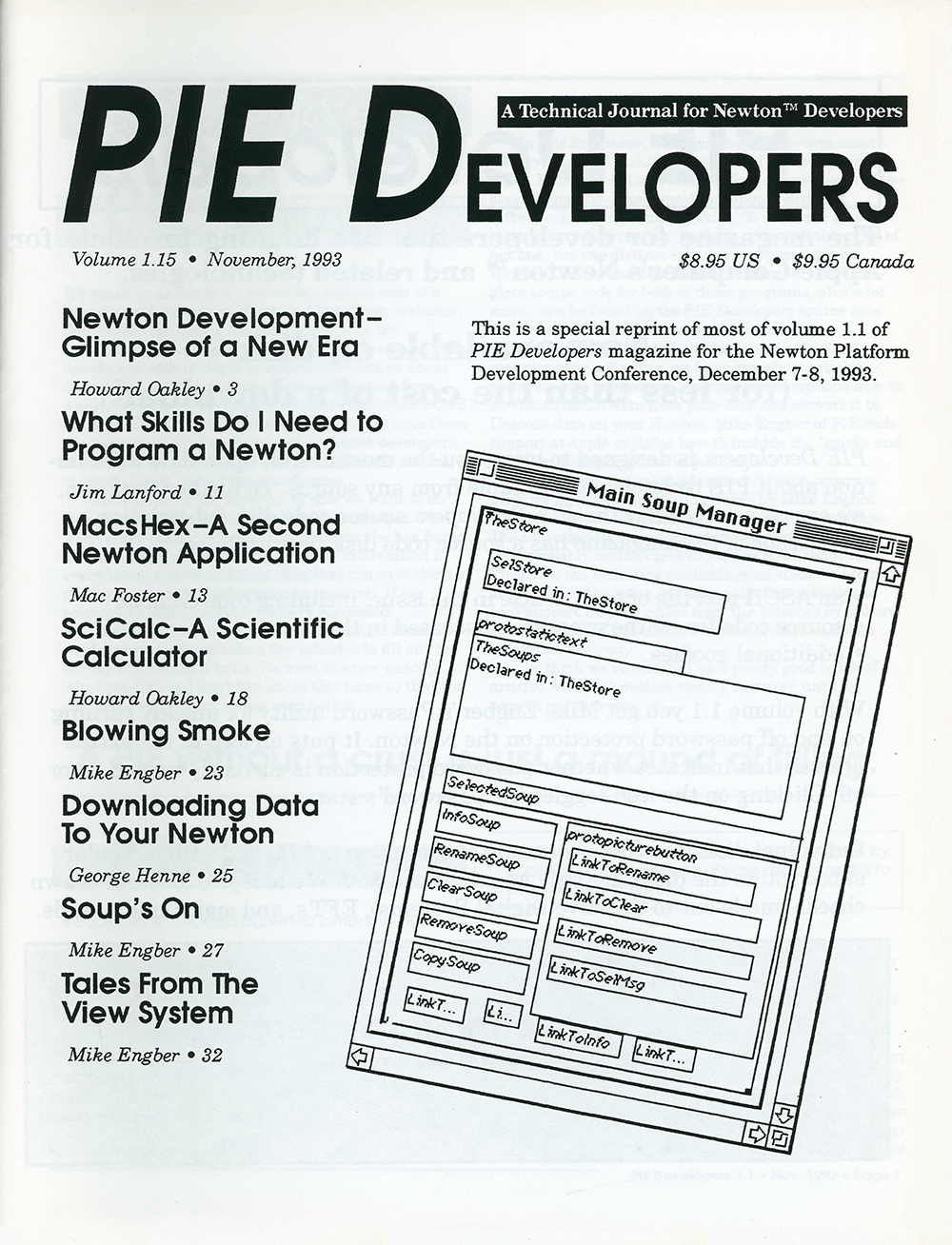
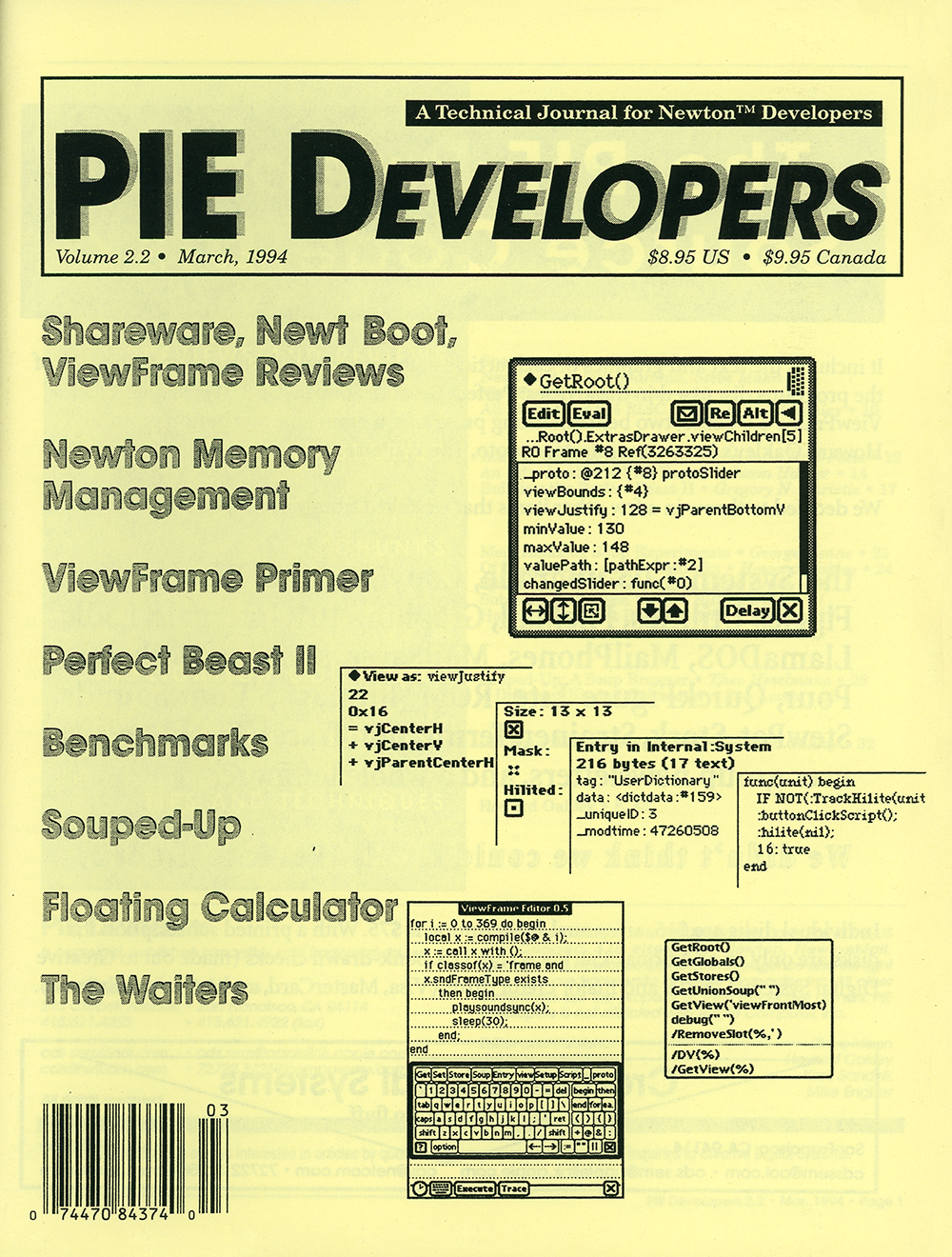
The journal had carried the same Newton-developer identity through its earlier numbers, including the November 1993 issue.4 By its September 1994 issue the cover subtitle had broadened to "A Technical Journal for PDA Developers" and the U.S. cover price had risen to $10.95, reflecting the journal's widening focus beyond the Apple Newton.5 Creative Digital Systems, based at 293 Corbett Avenue in San Francisco, used the journal's pages to market its own Newton developer tools, among them the ViewFrame debugging and exploration tool,6 the NewtRTFM electronic Newton Toolkit reference,7 and the ScriptLink connectivity kit,8 each offered to PIE Developers subscribers at a reduced price.
AI generated using primary sources referenced in the footnotes
Footnotes
- Creative Digital, Inc., PIE Developers - Volume 2.1 - January, 1994 (image scan), January 1994
- Creative Digital, Inc., PIE Developers - Volume 2.1 - January, 1994 (image scan), January 1994
- Creative Digital, Inc., PIE Developers - Volume 2.1 - January, 1994 (image scan), January 1994
- Creative Digital, Inc., PIE Developers - Volume 1.15 - November, 1993 (image scan), November 1993
- Creative Digital, Inc., PIE Developers - Volume 2.5 - September, 1994 (image scan), September 1994
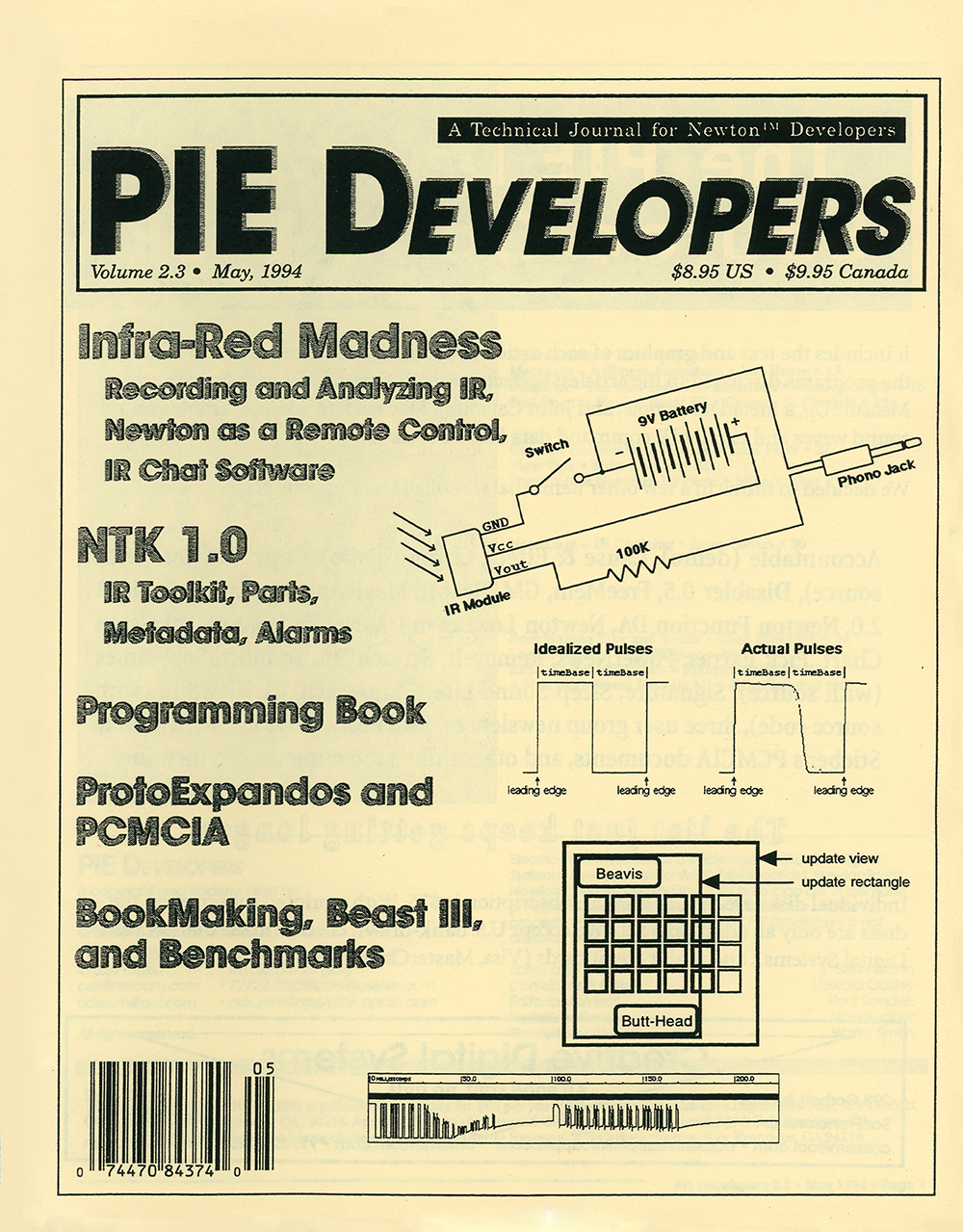
- Creative Digital, Inc., PIE Developers - Volume 2.3 - May, 1994 (image scan), May 1994
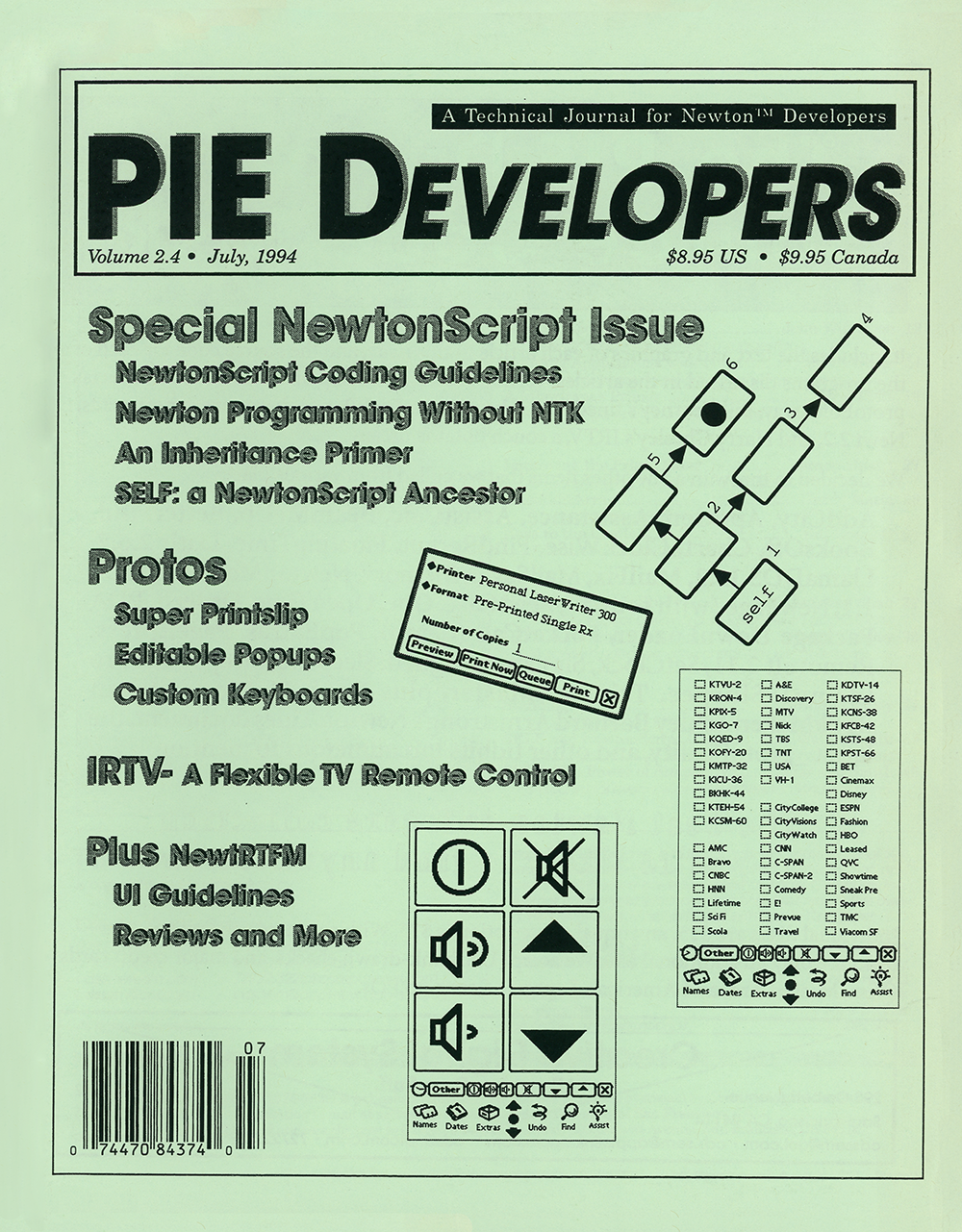
- Creative Digital, Inc., PIE Developers - Volume 2.4 - July, 1994 (image scan), July 1994
- Creative Digital, Inc., PIE Developers - Volume 2.5 - September, 1994 (image scan), September 1994
Oral History
Connections
This artifact's place in the wider network of people, organizations, and artifacts. Drag to pan, scroll to zoom, and tap any node to focus its connections.